
Indicator Organisms
Microbiological indicator organisms play a key role in assessing hygiene standards within food production environments. The detection of certain bacteria, yeasts, or moulds serves as a warning sign of poor sanitary conditions and possible microbial contamination.
HACCP systems are an essential framework for ensuring the safety and consistency of food products. Various biological, chemical, and physical hazards can arise from raw materials, production processes, equipment, the surrounding environment, or personnel. Our rapid and dependable test systems allow for straightforward monitoring of raw materials, finished products, production lines, staff hygiene, and cleaning efficiency (including CIP water) to detect microbial contamination.
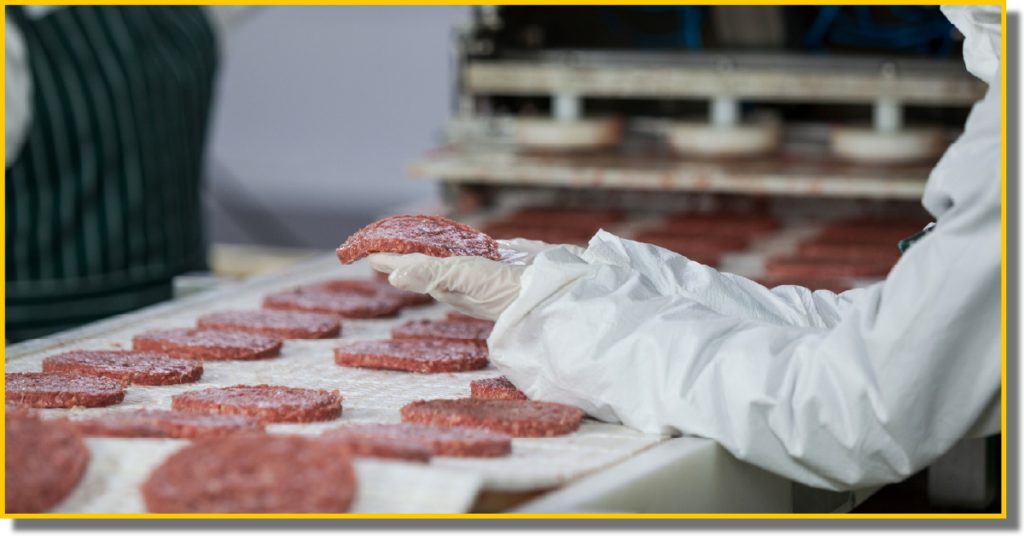
Types of Microbiological Indicator Organisms
The “total viable count on surface” measures the number of colony-forming units (cfu) per a defined surface area (e.g., 1 cm²). This is typically assessed using total plate count agar, with colonies counted after 48 hours of incubation at 30–35°C. It serves as an indicator of hygiene in food production, revealing potential microbial loads and contamination sources. The “aerobic mesophilic count” represents the number of cfu that develop on a plate count medium under mesophilic conditions (approximately 30–37°C) over a set incubation period, providing insight into the microbial status of production environments and overall sanitation levels.
Coliform bacteria are indicators of fecal contamination and are often used to monitor water quality. Their detection on surfaces in the production environment or in solid foods signals that hygienic conditions need improvement. Coliform bacteria, which include genera from the Enterobacteriaceae family, share biochemical characteristics such as positive lactose fermentation and negative oxidase reaction. They can be identified using nutrient media with chromogenic substrates for their enzyme β-galactosidase (e.g., X-GAL).
Enterobacteriaceae are gram-negative, rod-shaped bacteria typically 1-5 µm in length. They are facultative anaerobes, mostly motile, but some genera are non-motile. Enterobacteriaceae are oxidase-negative and can be distinguished from similar genera by this trait. These bacteria are normal components of the gut flora in humans and animals and are also widely spread in the environment (e.g., soil, water). Some genera, such as Cedecea, Citrobacter, Enterobacter, Escherichia, Hafnia, Klebsiella, Kluyvera, Morganella, Proteus, Rahnella, Salmonella, Serratia, Shigella, and Yersinia, are pathogenic and can cause serious diseases.
Enterococci are gram-positive organisms that belong to the intestinal bacteria, alongside the gram-negative Enterobacteriaceae. They may appear as contaminants in various fermented foods, indicating poor sanitary conditions during production and processing. However, Enterococci are also used as starter cultures in fermentation processes, contributing to the development of organoleptic properties in fermented foods. In water, Enterococci serve as indicators of faecal contamination, appearing only if introduced by human or animal feces.
Yeasts and molds can contaminate foods, leading to quick spoilage. Molds, in particular, can produce toxic or allergenic substances, posing significant health risks. These organisms can spread rapidly through dust and aerosols, consistently contaminating production surfaces. Therefore, they should be included in hygiene monitoring sampling plans.
Yeasts are facultative anaerobic, unicellular fungi that ferment sugar to CO2 and H2O, or to alcohol and CO2 under anaerobic conditions. These properties are commercially exploited in brewing, wine, and baking industries, with Saccharomyces cerevisiae being the most common industrial strain. Candida species are significant in food spoilage, residing on human and animal mucosa.
The term “mold” commonly refers to the visible part of fungi present on the surface of contaminated food. Beneath the surface, fungi form mycelium, which cannot be seen with the naked eye. Specific molds and yeasts are used industrially, such as in cheese production. However, harmful mold genera can produce toxins (mycotoxins) and have allergenic potential due to their spore formation. Besides food spoilage, molds are also a concern in buildings infested by mold.
Our test systems provide a range of benefits for monitoring microbiological indicator organisms. They deliver rapid and reliable results, allowing for the quick detection and quantification of microbial contaminants to ensure food safety. With comprehensive coverage, they can be used to test raw materials, finished products, production lines, staff, and cleaning efficiency. Designed for ease of use, these systems integrate smoothly into existing HACCP programs, while their high sensitivity and specificity enable the detection of even low levels of contamination, helping to prevent the spread of harmful microorganisms.

Products By Microbiological Contamination





Product Portfolio
Ordering Information
| Ref | Description | Number of Tests/Amount | |
|---|---|---|---|
| ZLC1002657 | Lumitester SMART / PD-20 / PD-30 Control Lit | 1 |
Ordering Information
| Ref | Description | Number of Tests/Amount | |
|---|---|---|---|
| R1091 | RIDA®CHECK | 100 Determinations |
Ordering Information
| Ref | Description | Number of Tests/Amount | |
|---|---|---|---|
| HS9801 | Compact Dry YMR | 100 Nutrient Plates | |
| HS9541 | Compact Dry AQ | 100 Nutrient Plates | |
| HS9461 | Compact Dry ETC | 100 Nutrient Plates | |
| HS8801 | Compact Dry YM | 100 Nutrient Plates | |
| HS8771 | Compact Dry TC | 100 Nutrient Plates | |
| HS9431 | Compact Dry ETB | 100 Nutrient Plates | |
| HS8781 | Compact Dry EC | 100 Nutrient Plates | |
| HS8791 | Compact Dry CF | 100 Nutrient Plates |
Ordering Information
| Ref | Description | Number of Tests/Amount | |
|---|---|---|---|
| Q231 / Q232 / Q233 | QuickGEN PCR Kit Screening and Differentiation of Wine Spoilers | 96 Reactions / 24 Samples | |
| Q221 / Q222 / Q223 | QuickGEN PCR Kit Screening and differentiation of Wine Spoilers | 96 Reactions / 12 Samples | |
| Q705 | Simplex® Easy Spin Plus | 50 Preparations | |
| Q583 | QuickGEN PCR Kit Zygosaccharomyces rouxii | 48 Reactions | |
| F5180 | SureFast® Enterobacteriaceae 4plex | 100 Reactions | |
| F5504 | SureFast® Fecal Screen 4plex | 100 Reactions | |
| Q982 | QuickGEN PCR Kit Yeast Universal -Low- | 48 Reactions | |
| Q091 / Q092 / Q093 / Q094 | GEN-IAL® QuickGEN P1 and Dekkera spp. Screening | 48 Reactions | |
| Q360 | GEN-IAL® Dekkera bruxellensis Standard DNA | 1 x Standard 1 200000 cfus / 2.5μL DNA | |
| Q183 | GEN-IAL® QuickGEN PCR Kit S. cerevisiae var. diastaticus White | 48 Reactions | |
| Q563 | GEN-IAL® QuickGEN Yeast Zygosaccharomyces bailii White | 48 Reactions | |
| Q562 | GEN-IAL® QuickGEN Yeast Zygosaccharomyces bailii Low | 48 Reactions | |
| Q555 | GEN-IAL® QuickGEN Yeast Dekkera spp. | 50 Reactions | |
| Q553 | GEN-IAL® QuickGEN Yeast Dekkera spp. White | 48 Reactions | |
| Q552 | GEN-IAL® QuickGEN Yeast Dekkera spp. Low | 48 Reactions | |
| Q551 | GEN-IAL® QuickGEN Yeast Dekkera spp. High | 48 Reactions | |
| Q532 | GEN-IAL® QuickGEN Wild yeast 2 Low | 48 Reactions | |
| Q525 | GEN-IAL® QuickGEN Wild Yeast 1 | 50 Reactions | |
| Q321 / Q322 / Q333 / Q324 | GEN-IAL® QuickGEN Wine Screening | 48 Reactions | |
| Q181 | GEN-IAL® QuickGEN Yeast Saccharomyces diastaticus High | 48 Reactions | |
| Q163 | GEN-IAL® QuickGEN Yeast Bottom Fermented White | 48 Reactions | |
| Q162 | GEN-IAL® QuickGEN Yeast Bottom Fermented Low | 48 Reactions | |
| Q153 | GEN-IAL® QuickGEN® Yeast Top Fermented White | 48 Reactions | |
| Q152 | GEN-IAL® QuickGEN® Yeast Top Fermented Low | 48 Reactions | |
| Q081 / Q082 / Q083 | GEN-IAL® QuickGEN Beer Differentiation | 96 Reactions | |
| Q071 / Q072 / Q073 | GEN-IAL® QuickGEN Beer Yeast and Bacteria Differentiation | 96 Reactions | |
| Q051 / Q052 / Q053 / Q054 / Q055 | GEN-IAL® QuickGEN P1 Screening and Hop Resistance | 48 Reactions | |
| Q031 / Q032 / Q033 / Q034 | GEN-IAL® QuickGEN P1 Screening Without Yeast | 48 Reactions | |
| Q331 / Q332 / Q333 / Q334 | GEN-IAL® QuickGEN Wine Screening Without Yeast | 48 Reactions | |
| Q535 | GEN-IAL® QuickGEN Wild Yeast 2 | 50 Reactions | |
| Q522 | GEN-IAL® QuickGEN Wild Yeast 1 Low | 48 Reactions | |
| Q021 / Q022 / Q023 / Q024 / Q025 | GEN-IAL® QuickGEN P1 Screening | 48 Reactions | |
| Q143 / Q145 | GEN-IAL® QuickGEN Enterobacteriacea spp. | 50 Reactions | |
| Q182 | GEN-IAL® QuickGEN Yeast Saccharomyces diastaticus Low | 48 Reactions | |
| Q041 / Q042 / Q043 / Q044 / Q045 | GEN-IAL® QuickGEN P1 and S. diastaticus Screening | 48 Reactions | |
| Q541 / Q542 / Q543 | GEN-IAL® QuickGEN Yeast Differentiation | 96 Reactions | |
| Q175 | GEN-IAL® QuickGEN Yeast Wickerhamomyces anomalus | 50 Reactions | |
| Q151 | GEN-IAL® QuickGEN® Yeast Top Fermented High | 48 Reactions | |
| Q161 | GEN-IAL® QuickGEN Yeast Bottom Fermented High | 48 Reactions | |
| Q112 | GEN-IAL® QuickGEN Pectinatus / Megasphaera Differentiation Low | 48 Reactions | |
| Q105 | GEN-IAL® QuickGEN Hop Resistance | 50 Reactions | |
| Q345 | GEN-IAL® Biogenic Amines | 50 Reactions | |
| F5507 | SureFast® Enterobacteriaceae Screening PLUS | 100 Reactions | |
| F5506 | SureFast® Parasitic Water Panel 4plex | 100 Reactions | |
| Q095 | GEN-IAL® QuickGEN Biofilm | 50 Reactions | |
| Q721 / Q723 / Q724 / Q725 | GEN-IAL® QuickGEN Alicyclobacillus Differentiation | 48 Reactions | |
| Q371 / Q372 / Q373 | GEN-IAL® QuickGEN Dekkera bruxellensis Quantitative | 48 Reactions | |
| Q561 | GEN-IAL® QuickGEN Yeast Zygosaccharomyces bailii High | 48 Reactions | |
| F5502 | SureFast® Legionella Screen PLUS | 100 Reactions | |
| F5501 | SureFast® Legionella pneumophila PLUS | 100 Reactions |